By the Duqky team — published May 03, 2026
Last updated: May 03, 2026
If you’re a real estate broker who spent last Tuesday driving 45 minutes to show a property, waiting 20 minutes for a no-show buyer, then driving back, you already know the problem. In-person sales are exhausting, expensive, and increasingly unnecessary. The good news? There are plenty of strong alternatives to in-person sales for real estate brokers in 2026, and most of them don’t require you to leave your desk.
This post covers the best alternatives to in-person sales for real estate brokers, from virtual tours to AI-powered lead qualification, plus how to start building a digital-first sales pipeline that actually compounds over time.
Why In-Person Real Estate Sales Are Becoming Obsolete
The traditional model of selling property has always been time-heavy. Brokers and agents spend hours driving to listings, hosting open houses, and meeting buyers who may or may not be serious. That model made sense before buyers could research homes digitally, but the landscape has shifted dramatically.
Consider what in-person selling actually costs:
- Travel time and fuel across multiple showing appointments
- Scheduling coordination between sellers, buyers, and agents
- Physical staging costs for homes that may sit on the market for weeks
- Lost productivity during hours that could go toward lead generation or closing deals
Beyond the direct cost, buyer behavior has changed. Most home buyers today begin their search online and expect digital-first experiences long before they set foot in a property. Brokers who still rely entirely on traditional in-person methods are competing at a disadvantage, especially against tech-enabled listing services and discount brokerages that move faster with lower overhead.
The bottom line is that in-person sales aren’t going away entirely, but they no longer need to anchor every step of the transaction.
The Rise of Remote and Digital Selling in Real Estate
The normalization of virtual workflows post-2020 accelerated what was already a slow-building shift in real estate. Buyers became comfortable making significant decisions, including home purchases, based on video walkthroughs, 3D tours, and digital documentation. That comfort hasn’t reversed.
According to the National Association of Realtors (NAR), a growing share of buyers report finding their home online before ever contacting an agent. Platforms like Zillow have conditioned buyers to expect rich digital property experiences as a baseline, not a bonus.
Sellers are also increasingly aware of alternatives. From flat-fee MLS services to for sale by owner models to rebate brokerages like Prevu, the options for sellers who want to reduce real estate commission costs are expanding. Full-service brokers need to compete on value, expertise, and service quality, not just physical presence.
The brokers growing fastest in 2026 aren’t the ones doing the most showings. They’re the ones using technology to deliver better results with more flexibility and less overhead. Remote real estate sales strategies generate real savings on cost per transaction, and the digital-first brokerages leaning into this model are compounding those advantages every year.
Understanding the Alternatives Sellers Are Already Considering
Before jumping into the tools, it helps to understand the competitive landscape. When sellers explore home sale options, they’re often weighing several different models:
- For Sale by Owner (FSBO): Sellers handle the listing and marketing themselves, skipping agent commissions entirely. It gives sellers maximum control but usually results in lower sale prices and longer time on market.
- Flat-Fee MLS Services: Sellers pay a fixed fee to get their property listed on the Multiple Listing Service (MLS), handling most of the transaction work themselves. The cost is low but the service is limited.
- Discount Brokerages and Rebate Brokerages: Companies like Prevu or Falaya offer reduced commissions or buyer rebates while still providing some level of agent support.
- Transaction Brokers: These brokers facilitate the deal without representing either side exclusively, which reduces their service scope but also their commission.
- iBuyers: Investors who make direct cash offers on homes, skipping the listing process entirely. Sellers trade some price for speed and certainty.
A full-service broker who can’t articulate why their service is worth the real estate commission in the face of these alternatives is always going to be fighting an uphill battle. The solution isn’t to lower your price; it’s to deliver demonstrably more value. A digital-first sales approach is one of the most effective ways to do that.
Top Alternatives to In-Person Sales for Real Estate Brokers
Here’s a breakdown of the most effective alternatives brokers are using right now to reduce reliance on physical showing time while keeping conversion rates strong.
Virtual Tours and 3D Walkthroughs
Tools like Matterport allow brokers to create immersive 3D walkthroughs of any property. Buyers can explore a home at their own pace, on their own schedule, without anyone needing to be present. This is particularly powerful for out-of-town buyers or anyone early in their search who isn’t ready to commit to a showing.
A quality 3D tour also makes your listing stand out against FSBO sellers and flat-fee MLS listings that can’t offer the same experience.
Video Showings and Live-Streamed Walkthroughs
A broker or agent can walk through a property on a live video call, answering buyer questions in real time. This feels personal without the logistics of a physical visit. It’s faster, cheaper, and surprisingly effective at qualifying serious buyers before any in-person time is invested.
Digital Open Houses
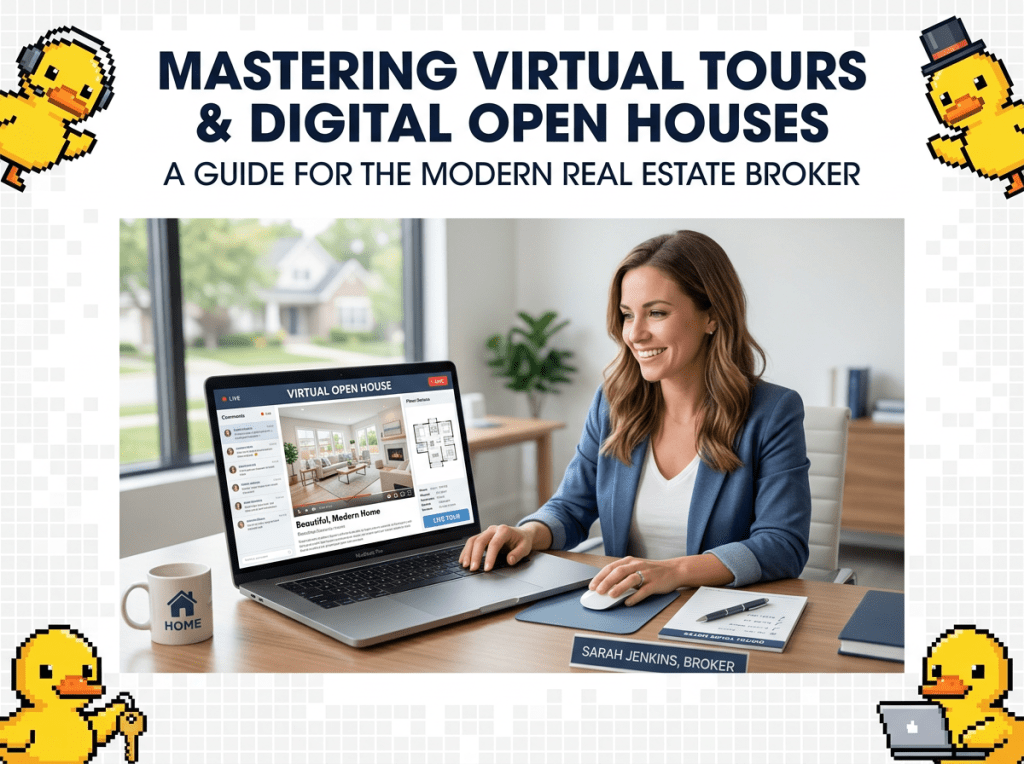
Instead of a traditional open house with refreshments and scheduling headaches, you can host live-streamed open house events via Zoom or YouTube Live. As one broker who’s done a lot of digital open houses noted, "You can get a lot more open houses in than if you only do in-person ones." These sessions can:
- Reach more buyers simultaneously
- Get recorded for later viewing
- Generate leads without anyone needing to park outside the listing on a Sunday afternoon
A savvy approach is to use digital open houses as a filtering mechanism. If you have a packed in-person open house scheduled, you can offer a virtual one first to less committed buyers. Those who show genuine interest can then be invited to the main in-person event. As that same broker explained, "If they pass the virtual open house, they move on to the main in-person open home. It’s a great filter."
AI-Powered Lead Qualification
Not every inquiry deserves the same follow-up. AI tools can score inbound leads based on behavior, readiness signals, and budget indicators, so agents focus their energy on buyers most likely to transact. This replaces hours of manual follow-up calls with an automated qualification layer that runs 24/7.
CRM Automation and Email Nurture Sequences
A well-built CRM with automated email sequences keeps buyers and sellers warm without requiring manual outreach after every touchpoint. Buyers researching a home sale over several months stay engaged through helpful content, market updates, and listing alerts. When they’re ready to move, the broker who stayed present digitally is the one they call.
Content Marketing and Neighborhood Guides
One of the most underutilized tools in real estate marketing is long-form content. Neighborhood guides, school district comparisons, local market reports, and buyer education posts drive organic traffic from people actively searching for properties.
A broker with strong content presence builds trust before a buyer ever reaches out. This is especially valuable for competing against discount brokerages and flat-fee MLS services that undercut on price but can’t offer the expertise or the ability to negotiate on a client’s behalf.
Chatbots for Qualifying Buyers
A chatbot embedded on a listing page or brokerage website can ask qualifying questions, capture contact details, and route serious inquiries to the right agent automatically. It handles the top of the funnel so your team handles the close.
Selling Directly to Cash Buyers and iBuyers
For sellers who want speed over price, connecting them with iBuyers or cash buyers can be a legitimate service offering. It simplifies the transaction, removes the need for extended listing periods, and gives brokers a way to serve a segment of the market that traditional listing processes don’t serve well.
Hybrid Real Estate Models
Some brokers are finding success in hybrid models, where digital tools handle discovery and qualification while in-person time is reserved only for final walkthroughs or closings. This dramatically reduces the cost per transaction while maintaining the personal touch where it actually matters.
The flexibility of a hybrid model also makes it easier to serve clients across a wider geographic area, which increases your potential listing volume without proportionally increasing your time on the road.
How Duqky Automates the Digital Selling Pipeline
Here’s where it gets interesting for brokers who want to build a long-term digital presence without hiring a content team or managing an SEO agency.
Duqky’s AI agents handle the content and organic marketing side of the equation on autopilot. For real estate brokers, that means:
- The Content Worker builds out neighborhood guides, seller resources, buyer FAQs, and local market content continuously, targeting the search terms your ideal clients are already typing
- Every piece of content compounds over time, building topical authority around your local market and property types so your brokerage shows up organically instead of relying on paid ads or in-person networking
- The Technical Worker audits your site for SEO issues so your listings and landing pages actually rank, not just exist
Think about what that replaces. Instead of going to networking events to stay top of mind, your content is doing that work around the clock. Instead of paying for lead generation ads with unpredictable ROI, organic traffic builds steadily as your content library grows. A broker who consistently publishes helpful content about selling property in their market becomes the go-to resource, and those readers convert into clients.
This is especially powerful for brokerages competing against flat-fee MLS services and discount brokerages. You can’t win on price against a $299 listing service, but you can win on trust, visibility, and expertise, and content is how you demonstrate all three at scale.
As covered in this guide on why well-written blog posts drive organic search traffic, consistent content isn’t just an SEO play; it’s a trust-building machine. And for local business visibility, the same principles that apply to local business marketing apply directly to real estate brokerages trying to dominate their market area organically.
Getting Started With Your Remote Sales Strategy
You don’t need to overhaul everything at once. Here’s a practical starting point:
- Audit your current calendar. How many hours last month went to travel, no-show appointments, and physical open houses? That number is your motivation.
- Start with virtual tours. Add 3D walkthroughs to every new listing. It’s a low-friction change with immediate impact on buyer experience.
- Set up a basic email nurture sequence. Even a three-email sequence for new buyer inquiries will outperform zero follow-up.
- Pick one content channel. A neighborhood guide or local market report published once a month starts building organic visibility without a huge time commitment.
- Measure what matters. Track leads generated per channel, cost per lead, and conversion rate. Digital tools give you data that in-person sales never could.
The goal isn’t to go fully remote overnight. It’s to gradually shift the ratio so your highest-value time goes toward closing transactions and helping clients negotiate the best possible deal, not chasing showings.
Frequently Asked Questions
What Is a Flat-Fee MLS Service?
A flat-fee MLS service lets sellers pay a fixed cost to have their property listed on the Multiple Listing Service (MLS) without paying a full-service broker commission. It’s a popular option for sellers who want MLS exposure while handling more of the transaction themselves, though it typically comes with less hands-on agent support and no one to negotiate on your behalf.
Can Brokers Still Earn Full Commission With Remote Selling Methods?
Yes. The real estate commission structure isn’t tied to whether showings happen in person or virtually. Brokers who deliver strong results through digital channels, including qualified leads, faster closings, and better marketing reach, can absolutely justify full-service pricing. The ability to negotiate effectively on a client’s behalf is one of the strongest arguments for full-service over flat-fee or discount alternatives.
Are iBuyers a Good Alternative for Most Home Sellers?
iBuyers offer speed and convenience but typically price properties below market value. They work best for sellers who prioritize certainty and a fast transaction over maximizing their home sale price. A good broker can help sellers weigh the tradeoff clearly and, in many cases, negotiate a better outcome through traditional listing channels.
What Is a Rebate Brokerage?
Rebate brokerages like Prevu offer buyers a partial rebate of the buyer’s agent commission after closing. It’s an attractive savings option for buyers who are comfortable doing more of the research and legwork themselves. For full-service brokers, it’s a competitor worth understanding so you can clearly communicate the added value you provide in return for your commission.
The Bottom Line
In-person sales built the real estate industry, but they’re no longer the only way to win. Modern brokers who lean into virtual tours, digital open houses, content marketing, and automated nurture sequences close more deals with less overhead and fewer burned-out weekday afternoons.
Remote selling isn’t a future trend you’re preparing for; it’s the present reality of how buyers and sellers want to work. The brokers building digital-first pipelines now are compounding their advantage while others are still scheduling showings the old way.
If you’re ready to see what an automated content and SEO pipeline looks like for a real estate brokerage, Duqky is worth a look. Start your free trial and put your marketing on autopilot.


Leave a comment