Product Led Content Strategy for SaaS: The Playbook Nobody Explains Simply
If you’re running a SaaS company, you’ve probably heard "product-led growth" thrown around in every founder Slack group and Twitter thread. But here’s the piece that gets skipped: your content has to be product-led too, not just your onboarding flow.
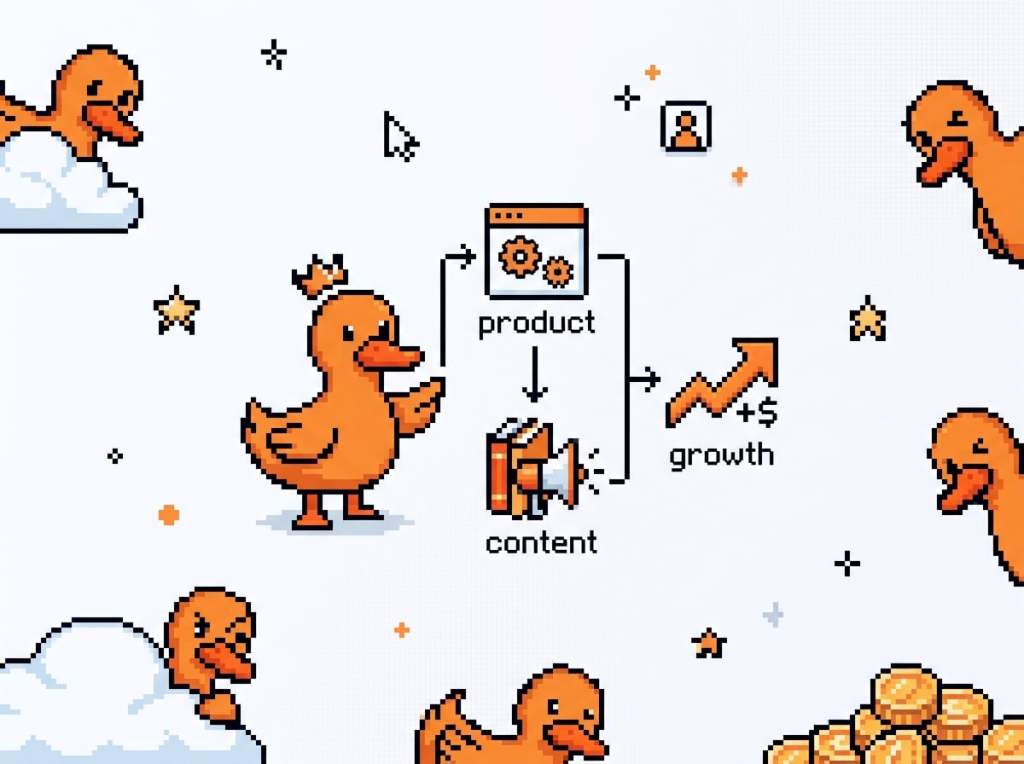
A product-led content strategy for SaaS means every blog post, every landing page, every piece of content you publish is built around getting users into your product faster, not just getting clicks. It’s the difference between writing "10 Tips for Better Project Management" (generic, forgettable) and "How to Set Up Automated Task Reminders in Under 5 Minutes" (specific, product-tied, converts).
Most B2B SaaS marketing strategy playbooks still treat content and product as two separate departments. Marketing writes blog posts to generate leads. Product builds features. Sales tries to close the gap between the two. That handoff is where deals die and trust erodes.
Product-led content flips this. Your content becomes a direct extension of the product experience. Instead of writing about pain points in the abstract, you show users exactly how your product features solve those pain points, in the same breath. No MQL purgatory. No twelve-touchpoint nurture sequence before someone even sees the product.
This matters more in 2026 than ever. Buyers are self-serving their entire research journey. They’re trying free trials before talking to sales. They’re reading reviews on G2 and TrustRadius before they’ll even take a demo call. If your content isn’t showing the product, you’re just noise competing with a dozen other SaaS blogs saying the same generic things.
This is also where a solid SEO strategy for SaaS and product-led content overlap. Google (and increasingly, AI search) rewards content that demonstrates real expertise and real product value, not fluffy listicles. Search engines want to surface content that actually helps users, and nothing helps users more than content showing them exactly how to solve their problem inside your product.
We’re going to walk through what product-led content actually looks like, why it works, and how to build it into your SaaS growth strategy without hiring a content team of twelve people.
Key Concepts of Product-Led Content Strategy SaaS
What Is Product-Led Growth?
Product-led growth (PLG) is a go-to-market approach where the product itself drives acquisition, conversion, and retention, not a sales team. Think Slack, Notion, Figma. Users try the product for free, get value fast, and either upgrade themselves or bring in their whole team without a single sales call. Wikipedia’s overview of product-led growth is a decent starting point if you want the textbook definition.
What Is Product-Led Content?
Product-led content is the marketing version of PLG. Instead of content that talks about your product from a distance, it’s content that puts the product front and center as the solution. Every blog post, guide, or comparison page shows real screenshots, real workflows, real product features doing the job.
The goal isn’t just ranking on Google. It’s getting someone to think "oh, I could just use this right now" halfway through reading.
What Makes Product-Led Content So Valuable?
A few things stack up here:
- It shortens the buying journey. Users don’t need three demo calls to understand what your product does; the content already showed them.
- It builds trust faster. When your content shows the actual product experience instead of generic advice, users believe you.
- It compounds. Every piece of content becomes both an SEO asset and a conversion asset at the same time.
- It reduces customer acquisition cost because content is doing double duty: acquisition and activation.
Put Your Users and Customers First
This sounds obvious, but most SaaS content is written for search engines or investors, not the actual user staring at a blank dashboard wondering what to do next. Product-led content strategy means writing from the user’s actual pain points and jobs-to-be-done, not from a keyword list alone (though the keywords still matter, don’t worry).
Practical Applications
Okay, theory’s fine, but how do you actually build this into your SaaS content marketing engine?
How to Create Product-Led Content That Converts Users
Map content to the user journey, not just the funnel. Awareness content should still hint at product value. Consideration content should show product features solving specific problems. Retention content should drive feature adoption for existing customers.
Use real product screenshots and workflows. Skip the stock photos. If you’re writing about automating outreach, show the actual outreach worker doing the work. If you’re writing about SEO audits, show the audit dashboard. Trust radius, ironically, is a business (TrustRadius) but also literally what you’re building with your reader by showing the real thing.
Write for jobs-to-be-done, not features. Nobody cares that you have "advanced reporting." They care that they can finally answer "why did signups drop last week" in two clicks.
Build content around free trial and self-serve onboarding moments. If someone reads a blog post and signs up, what happens in their first five minutes needs to match what the content promised. This is where user activation lives or dies.
Deliver More Delightful Customer Experiences
Product-led content isn’t a one-and-done blog post strategy. It needs to touch the whole customer journey, from that first Google search to renewal time. Content that helps existing customers discover new features (in-app messaging, email sequences, in-product guides) drives retention just as much as top-of-funnel content drives acquisition.
How to Create Product-Led Content That Acquires and Retains Users
- Publish comparison content that’s honest about tradeoffs (buyers smell fake objectivity from a mile away).
- Create "how to" guides tied directly to product workflows, not generic advice.
- Turn customer success stories into content that shows specific outcomes, not vague testimonials.
- Use product usage data to figure out what content topics actually drive activation, not just traffic.
Why B2B Buyers Are Losing Trust in Your Marketing Collaterals
Buyers have been burned by too many SaaS sites promising the world in a one-pager and delivering a clunky product. Generic marketing collateral, stock case studies, vague "increase productivity by 40%" claims, none of it lands anymore. What works: specific, product-tied content that shows rather than tells. This is also why well-written blog posts drive organic search traffic better than thin, keyword-stuffed pages ever will; quality and specificity are now table stakes for both search rankings and buyer trust.
What Really Happens Beyond MQLs?
Marketing qualified leads (MQLs) are a vanity metric if the content that generated them never showed real product value. A prospect who filled out a form because of a generic ebook is a colder lead than someone who signed up for a free trial after reading a product-specific how-to guide. Product-led content naturally generates product qualified leads (PQLs) instead, people who’ve already touched the product or seen exactly what it does. Those leads close faster and churn less.
How to Get New Users Directly From Content Through Product-Led Storytelling
Product-led storytelling is the connective tissue between a blog post and an actual signup. Instead of a case study that just says "Company X grew 30%," you walk through the specific workflow, the specific feature, the specific before-and-after. The story does the selling, not a CTA button.
How to Correctly Use Content in Your PLG Strategy
Connected content is the name of the game here. Your blog, your in-app guides, your email sequences, your help docs, they should all reference the same product moments and reinforce the same value proposition. Disconnected content (blog says one thing, product does another) kills trust fast.
If you want your SEO strategy for SaaS to actually support product-led growth, your Content Worker, Outreach Worker, and Technical Worker all need to be pointed at the same goal: getting users into the product and keeping them there, not just driving pageviews. This is exactly the kind of thing Duqky’s agents handle on autopilot, so your content stays connected to product without you manually auditing every page.
Frequently Asked Questions
How Is Product-Led Content Different from Regular Content Marketing?
Regular content marketing often optimizes purely for traffic and generic lead generation. Product-led content is built specifically to show the product solving a real problem, which shortens the buying journey and drives self-serve signups instead of just form fills.
Does Product-Led Content Strategy Work for B2B SaaS with Long Sales Cycles?
Yes, though the tactics shift slightly. Even with longer buying journeys and more stakeholders involved, product-led content builds trust earlier by showing real product value, which makes the eventual sales conversation shorter and easier because buyers already understand what they’re getting.
How Do I Measure If My Product-Led Content Is Working?
Look beyond pageviews and rankings. Track free trial signups tied to specific content pieces, feature adoption rates for users who read particular guides, and how content-driven signups compare in retention to sales-driven signups. If PQLs from content are converting and sticking around, it’s working.
Wrapping It Up
Product-led content strategy for SaaS isn’t a rebrand of content marketing with a trendy label slapped on. It’s a fundamentally different way of thinking about what your content is for. Instead of generating generic leads that sales has to warm up for months, you’re creating content that shows real product value and gets users activated fast.
The SaaS companies winning organic growth right now aren’t the ones publishing the most content. They’re the ones publishing the most connected content, tied directly to product features, user pain points, and real workflows.
If that sounds like a lot of coordination between your content, product, and SEO efforts (because it is), that’s exactly the kind of thing Duqky was built to handle. Our Content Worker, Outreach Worker, and Technical Worker run 24/7, keeping your content strategy tied to real product value while you focus on actually building the product. Connect your site and let SEO run on autopilot while your content does the heavy lifting of turning readers into users.


Leave a comment